
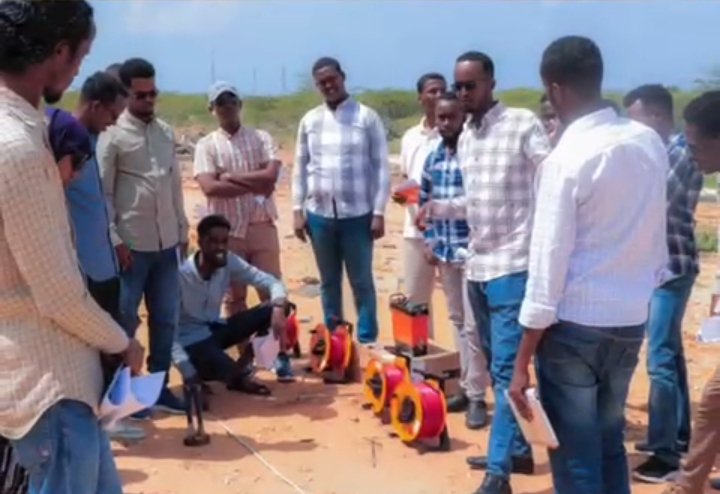
About Course
This course provides practical and theoretical training in the design, implementation, and interpretation of electrical resistivity surveys for groundwater, environmental, engineering, and geological investigations. Participants will develop the skills required to plan effective resistivity surveys, collect high-quality field data, and interpret subsurface conditions using industry-standard methods.
The course covers the fundamental principles of electrical resistivity, subsurface current flow, electrode configurations, and survey design considerations. Learners will gain hands-on knowledge of field procedures, data acquisition techniques, equipment setup, and quality control measures necessary for successful resistivity investigations.
Participants will also learn how to analyze and interpret resistivity data to identify aquifers, geological structures, weathered zones, bedrock formations, and other subsurface features. Through practical exercises and case studies, the course emphasizes real-world applications of resistivity methods in groundwater exploration, geological mapping, environmental assessment, and resource evaluation.
By the end of the course, participants will be able to design resistivity surveys, acquire reliable field data, interpret results confidently, and apply electrical resistivity methods to solve geoscientific and hydrogeological challenges.
Skills You’ll Gain
- Electrical resistivity survey design
- Electrode array selection and field setup
- Resistivity data acquisition techniques
- Field quality control and troubleshooting
- Vertical Electrical Sounding (VES) interpretation
- Subsurface geological mapping
- Groundwater exploration and aquifer assessment
- Resistivity data analysis and interpretation
- Geological and hydrogeological investigation
- Technical reporting and result presentation
Course Content
Fundamentals of Electrical Resistivity
-
Principles of Electrical Resistivity
-
Current Flow in the Subsurface
-
Factors Affecting Resistivity Measurements
Survey Design and Planning
Field Equipment and Data Acquisition
Vertical Electrical Sounding (VES)
Groundwater Exploration Applications
Data Interpretation and Final Project
Student Ratings & Reviews